

Progetto finanziato dalla FONDAZIONE DI MODENA, linea FOMO
Aspetti fondamentali
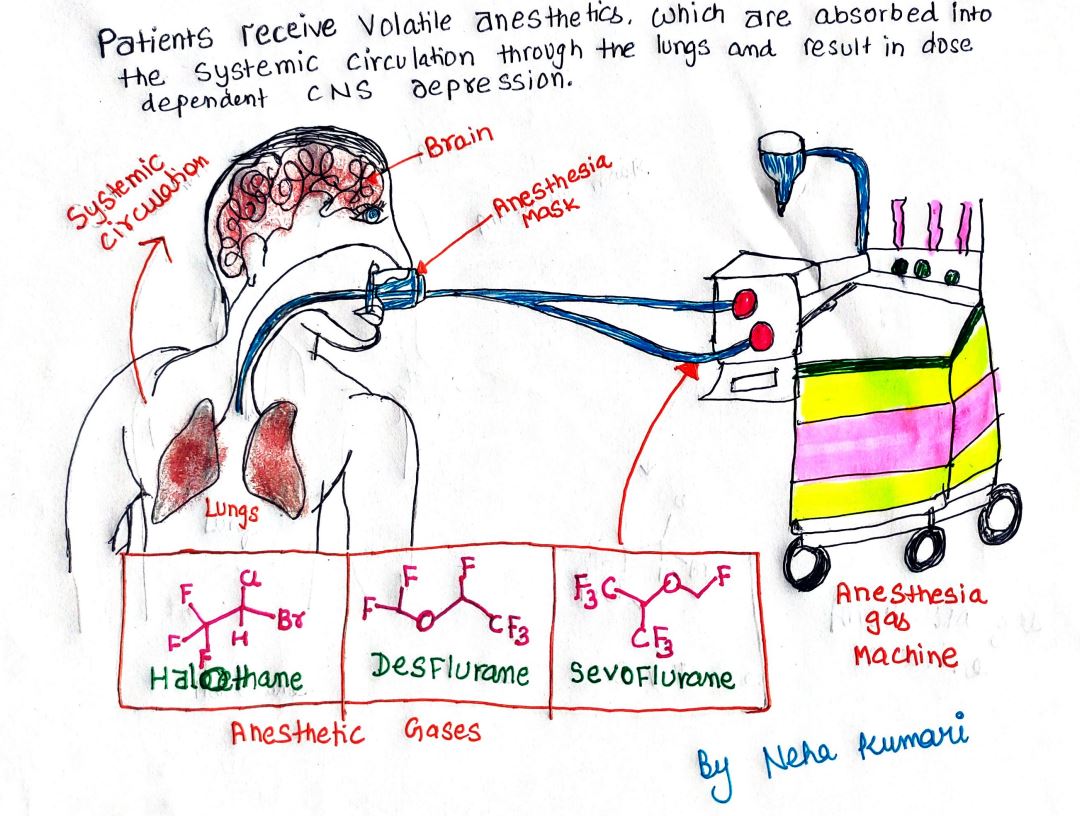
Il meccanismo dell’anestesia generale è un campo ancora aperto alla discussione, in particolare per quanto consta la relazione tra la “struttura molecolare dell’anestetico” e la “potenza anestetica”, ancora ad oggi relazione che non è nota. La soluzione di questo enigma è l’obiettivo del presente progetto di ricerca: AMNESIA, ovvero perseguire la determinazione di una relazione quantitativa tra attività anestetica e struttura molecolare (QSAR).
La attività di ricerca del progetto AMNESIA non parte da zero, piuttosto investigherà ulteriormente e svilupperà qualcosa di innovativo meccanismo fisico-chimico per l’azione dei composti anestetici, recentemente proposto in letteratura del Prof. Naaman e collaboratori [1], risultato ottenuto nell’ambito di un’indagine più ampia riguardante la reazione di riduzione dell’ossigeno (ORR) [2].
L’ipotesi alla base di questo nuovo meccanismo è che “esiste una relazione generale tra anestesia e respirazione”. Dove la respirazione è intesa come un modo non specifico per affrontare la modalità per controllare la concentrazione di ossigeno – attraverso il processo di respirazione – nel sangue. Dove la “concentrazione di ossigeno” comprende sia l’O_2 neutro disciolto nel sangue in forma ridotta, anione ossigeno O_2(-). In particolare, si presume che l’ORR svolga un ruolo centrale nella respirazione, e come conseguenza in anestesia.
Pertanto, questo progetto si concentra sul ruolo svolto dagli anestetici sull’ORR. Nella reazione ORR, l’ossigeno si riduce a formare prodotti che sono tutti allo stato singoletto, Va sottolineato che O_2 lo stato fondamentale (cioè lo stato elettronico dell’O_2 nel nostro sangue) è un tripletto. Mentre questo processo è “in linea di principio” vietato a causa della conservazione dello spin, si presume che se gli elettroni che si trasferiscono nella ORR sono spin-polarizzati, la reazione avvenga in modo più efficiente. Infatti, in rif [1], è stato osservato, per la prima volta, che la presenza di anestetici generali in soluzione diminuisce l’efficacia della reazione ORR. Suggerendo che un accoppiamento spin-orbita indotto dagli anestetici porta alla depolarizzazione dello spin. Inducendo così una diminuzione dell’efficienza ORR e anche un cambiamento nei prodotti di reazione.
Nel complesso, AMNESIA prende in considerazione tre diversi componenti principali: ORR, accoppiamento spin-orbita, struttura molecolare degli anestetici. Si ipotizza che questi ingredienti agiscano come fattori principali sullo spin nel bilanciare il rapporto di concentrazione O_2(0)/O_2(-). Sorprendentemente, i composti fondamentali e le architetture supramolecolari (ad esempio la cellula membrana) presenti nel nostro corpo sono chirali. Pertanto, dal punto di vista della “chiral-induced spin selectivity” (CISS)[3], il flusso di elettroni coinvolti nel processo redox all’interno del nostro corpo risulti in correnti spin-polarizzate.
[1] A. Gupta, Y. Sang, C. Fontanesi, L. Turin, R. Naaman, J. Phys. Chem. Lett. 14 (2023) 1756–1761.
[2] Y. Sang, F. Tassinari, K. Santra, W. Zhang, C. Fontanesi, B.P. Bloom, D.H. Waldeck, J. Fransson, R. Naaman, Proceedings of the National Academy of Sciences 119 (2022) e2202650119.
[3] K. Ray, S.P. Ananthavel, D.H. Waldeck, R. Naaman, Science 283 (1999) 814–816.
Se vuoi contattare ricercatori del progetto FAR2023 FOMO AMNESIA
FAR2023 - UniMORE claudio.fontanesi@unimore.it
Leggi tuttoFundamental aspects
AMNESIA project is not starting from scratch, rather it will further investigate and develop a ground breaking physicochemical mechanism for the action of anaesthetic compounds, recently proposed in the literature by Prof. Naaman and co-workers [1], a result obtained within a broader investigation concerning the oxygen reduction reaction (ORR) [2]. The hypothesis underlying this novel mechanism is that “it exists a relation between general anaesthesia and respiration”. Where respiration is meant as a not-specific way to address the mode to control the oxygen concentration – via the breathing process – within the blood. Here, the term “oxygen concentration” comprises both neutral O_2 dissolved in the blood, and its reduced form, the oxygen anion O_2(-). In particular, the ORR is assumed to play a central role in respiration, and as consequence in anaesthesia. Thus, this project focusses on the role played by anaesthetics on the ORR (if any). In ORR, oxygen is reduced to form products that are all in the singlet state, BUT it must be emphasized that O_2 ground state (i.e., the electronic state of the O_2 within our blood) is a triplet. While this process is “in principle” forbidden because of spin conservation, it is assumed that if the electrons transferred in the ORR are spin-polarized, the reaction occurs more efficiently. Indeed, in ref [11], it was observed, for the first time, that the presence of general anaesthetics in solution decreases the efficiency of the ORR. Suggesting that a spin–orbit coupling induced ny anaesthetics leads to spin depolarization. Thus inducing a decrease in the ORR efficiency, and also a change in the reaction products. On the whole, AMNESIA takes into account three different main actors: ORR, spin-orbit coupling, anaesthetics molecular structure. These ingredients are hypothesized to act as the main factors ruling spin based effects in balancing the O_2(0)/O_2(-) concentration ratio. Remarkably, fundamental compounds and supramolecular architectures (for example the cell membrane) found within our body are chiral. Thus, in the view of the chiral-induced spin selectivity (CISS) effect[3], the flow of electrons involved in redox process within our bodies results in spinpolarized currents.